
How Arrest Warrants Work in Crawford County
An arrest warrant gives police the power to take a named person into custody on a charged offense. Michigan sets the standard in MCL 764.1a: issuance on a proper sworn complaint and reasonable cause, drawn from factual allegations, sworn testimony, or affidavits. Crawford County's review happens in the 87-C District Court. Its judges and magistrates sit on that decision. The county's criminal matters page notes that every criminal case in 46th Circuit jurisdiction starts in District or Family Division. Those same district judges and magistrates issue the warrants. They also set bond.
Crawford County Arrest Warrant Complaints
The complaint and its affidavit carry the facts. The judge or magistrate decides whether those facts support the order. That review is the whole point of the process. An officer's suspicion alone does not produce a warrant. When someone is already in custody without one, Michigan lets a magistrate decide on reasonable cause under MCL 764.1c. Either way, check the court file. The county criminal matters page traces how a Crawford County case moves from that finding to arraignment.
Arrest Warrants: What They Contain
An arrest warrant identifies the case and the person, and it travels with the case file. The exact display depends on the court. Crawford County warrants carry the fields listed here.
| Case and Warrant Number | The docket key, illustrated only as 20XX-XXXXXX because the court controls the format. |
|---|---|
| Named Subject | The person the order names, with any identifiers the complaint supplied. |
| Charge or Offense | The offense described or the statute cited, when it is public. |
| Issuing Judge or Magistrate | The judicial officer who signed the order, with the issue date. |
| Bond or Release Terms | An amount, personal recognizance, or a return-to-court direction, when recorded. |
| Status | Active, served, recalled, or quashed. |
Read the charge and the status before the rest.
Crawford County Search Warrants Are Different
A search warrant authorizes a search, nothing more. It does not order anyone arrested, and it is not the same file as an arrest warrant even when one investigation produces both. The two are easy to confuse. They share a court and a case number. Search-warrant affidavits also get a privacy period under MCL 780.651. The affidavit stays nonpublic at first. It becomes public on the 56th day unless a court enters a suppression-related order before then. A Crawford County records request will not open it early.
How Warrants Get Served in Crawford County
The sheriff serves warrants for Crawford County's courts. City or state officers can act too, when an order falls inside their own work. Field checks run through the state's restricted law-enforcement network, not a public site. The Crawford County Sheriff's Office page lists patrol, jail, and dispatch functions plus a crime-tip line, and it posts hours and contact details. It publishes no warrant roster. For service questions call 989-348-4616, extension 214, weekdays from 8:00 a.m. to 4:00 p.m. That page is the routing point.
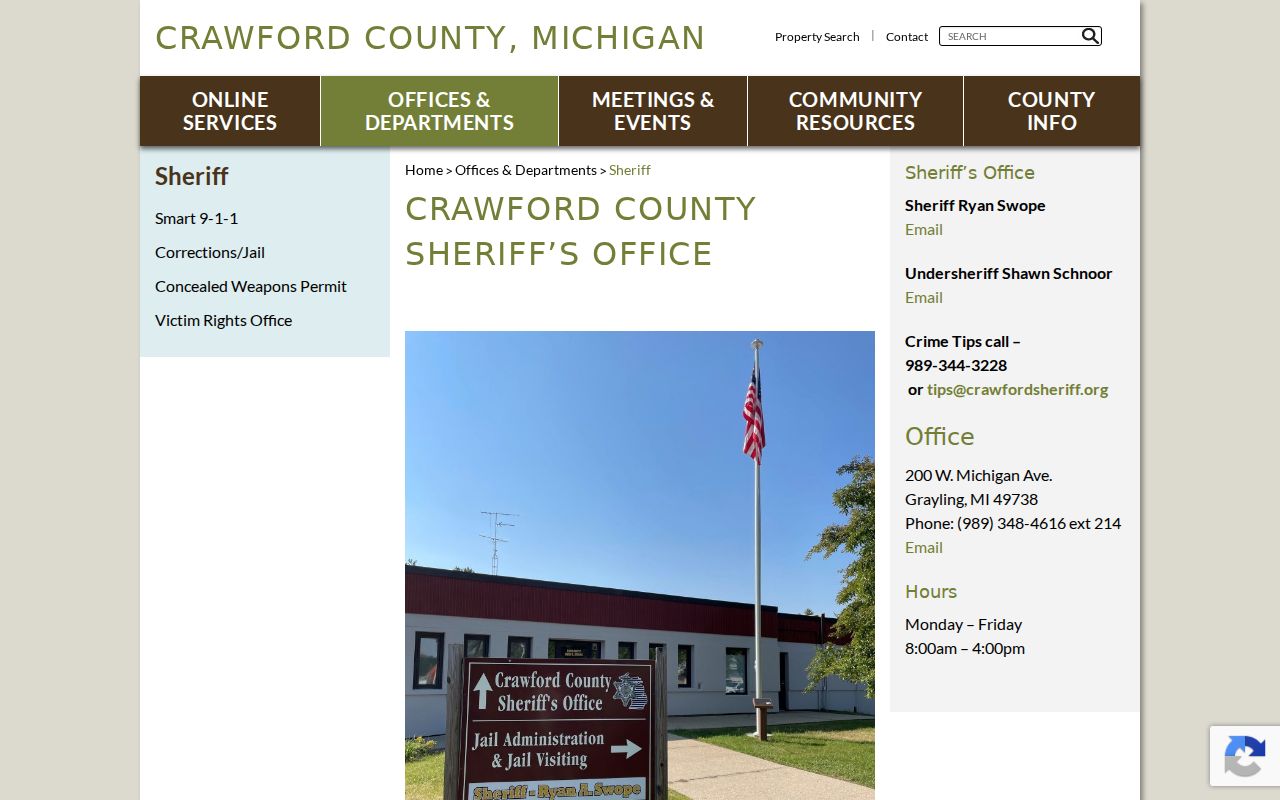
The Crawford County Sheriff's Office page carries the hours and contact details that route questions about warrant service.
After a Crawford County Arrest Warrant
Anyone arrested by any agency in Crawford County lands at the corrections center, 200 W Michigan Avenue. The jail page describes a 53-bed facility that holds pretrial and qualifying sentenced populations. It lists 989-348-4822 as a 24-hour information line. Cash bail can be paid online or by phone at any hour. Bond is posted at the clerk's office during business hours and at the jail after hours. Call the jail for custody and posting questions. It does not decide the case. It does not recall a warrant.
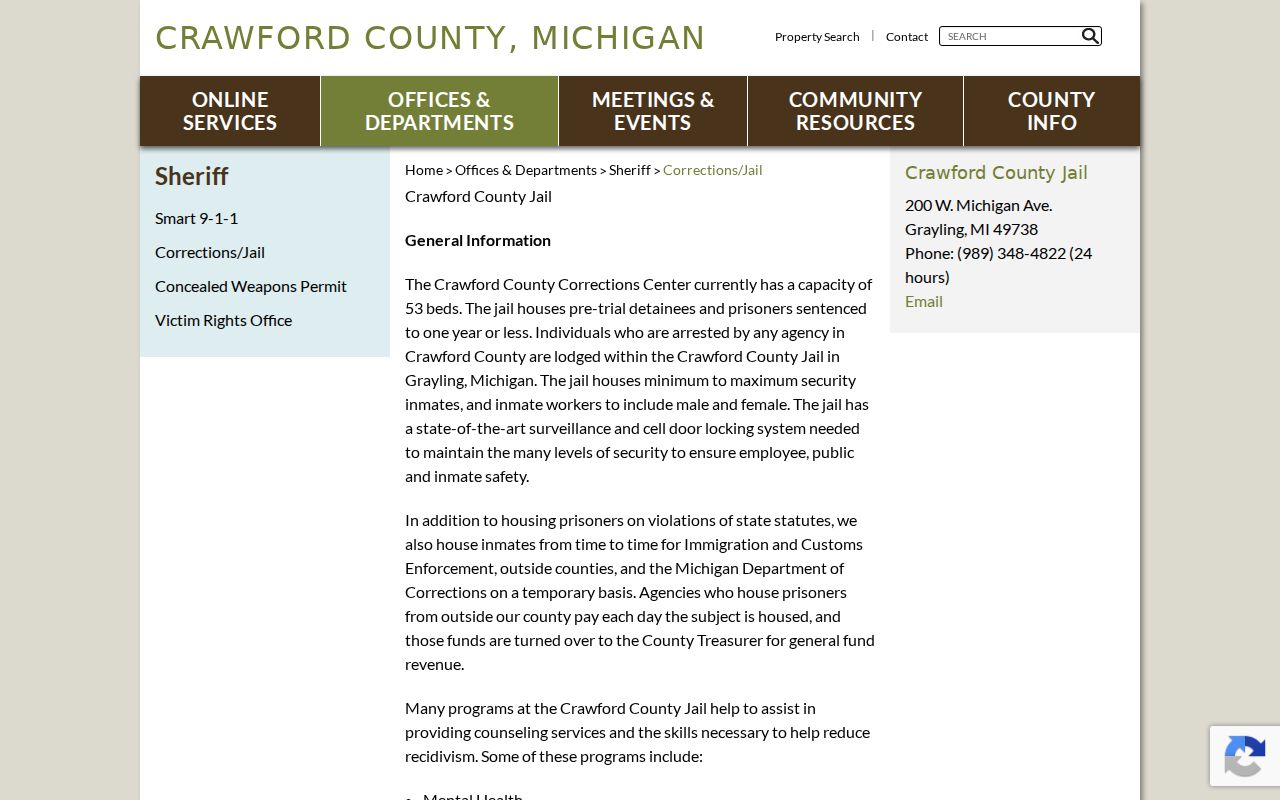
That page is the after-hours route for custody and cash-bail questions in Crawford County.
Note: The jail answers custody and posting questions, and the issuing court decides the release terms.
Arrest Warrants, Summonses, and Bench Warrants
Courts pick the tool that fits the case. A summons asks you to show up on your own. An arrest warrant in Crawford County authorizes custody, while a bench warrant answers a missed obligation. See bench warrant lookup for that side.
| Feature | Arrest Warrant | Summons | Bench Warrant |
|---|---|---|---|
| What it orders | An arrest | An appearance on a set date | An arrest for a missed duty |
| Basis | Probable cause of an offense | A charge that does not need custody | Failure to appear or comply |
| Who issues it | A judge or magistrate | The court or an officer | The judge in the open case |
| How to respond | Surrender, bond, or counsel | Show up on the date | Appear, recall, or quash |
Who Serves Crawford County Arrest Warrants
Three agencies police Crawford County, and all three book into the same jail. The sheriff's office covers the county at large. Grayling Police serve the city at 989-348-4621. The Michigan State Police Houghton Lake post covers the area from 989-422-5101. Camp Grayling and the Department of Natural Resources also operate here. Dispatch at 989-348-6341 takes routine nonemergency calls around the clock across roughly 576 square miles. Its agency list shows the routing for each.
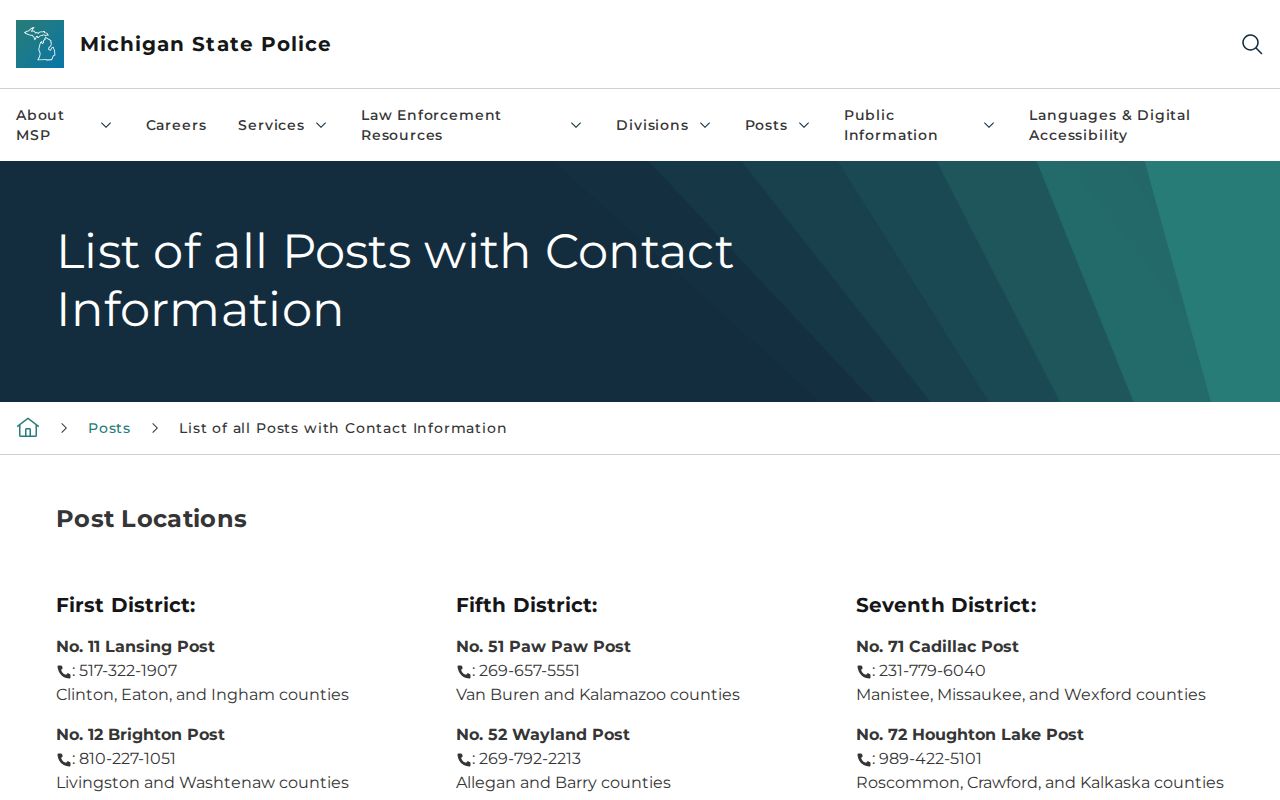
That list shows which state police post serves Crawford County.
Handling an Arrest Warrant in Your Name
Begin with the court file, not a roadside explanation. Ask the Crawford County clerk what the docket shows. Then plan your appearance with counsel. A lawyer can seek a recall, arrange a surrender at a controlled time, and explain the bond a judge is likely to set.
Important: Talk to a Michigan attorney before you turn yourself in, because an open warrant can lead to an arrest at any traffic stop or police contact.
Reading a Crawford County Arrest Warrant
An arrest warrant shows that a court found reason to make an arrest. It settles nothing else. The case that follows has its own events and its own outcome, so read a docket entry as a step in a process, not a result. A missing public record may be restricted rather than gone. Only the issuing office can confirm its current status. In Crawford County, that means the issuing court.
Note: A warrant records an accusation rather than a result, and the case outcome is a separate event.